 Entry · HEALTH-KNews
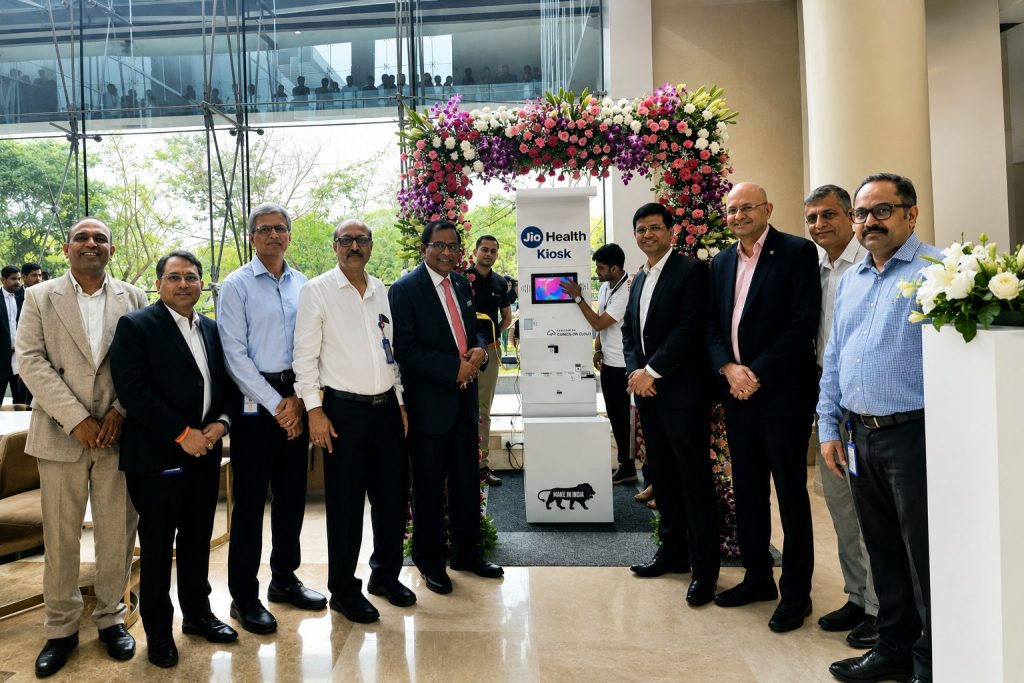
Health Kiosk and Health Lounge are now live at Reliance Corporate Headquarters
Some milestones are about scale. Others are about direction. This one is about both.
Read story 4 min read
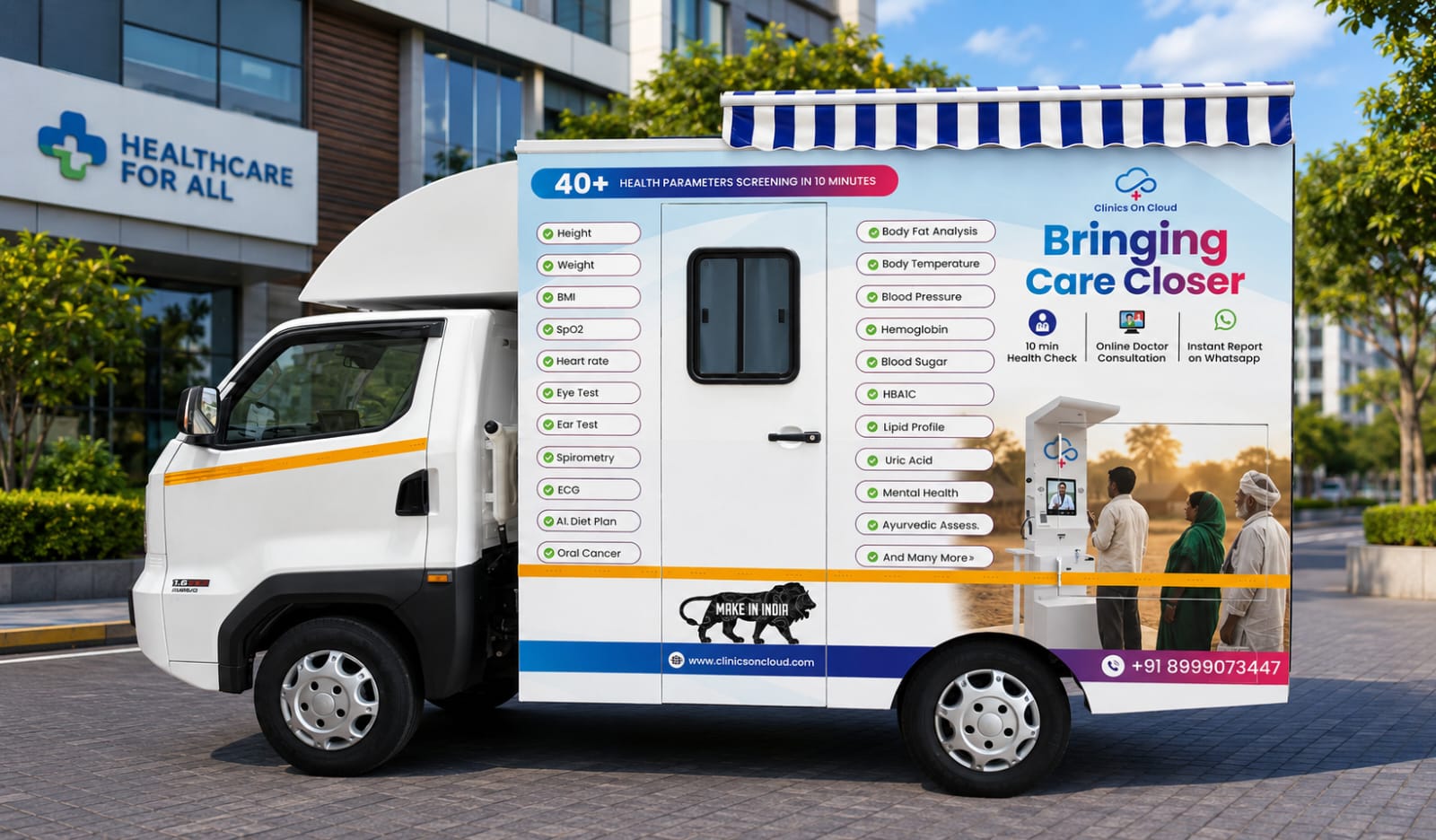
You cannot build a hospital in every village. But you can build a hospital that visits every village.
Every morning, in thousands of villages across India, someone makes a difficult calculation. A farmer with chest pain weighs the cost of a day of lost wages against a forty-kilometre journey to the nearest doctor. More often than not, the wages win.
Nearly 65 percent of Indians live in rural areas, yet the overwhelming majority of doctors, diagnostic labs and hospitals are concentrated in cities and towns. Primary Health Centres and Sub-Centres face chronic staff shortages, and many serve populations scattered across terrain that becomes impassable for months at a time.
A unit is staffed by a doctor, a nurse, a pharmacist and a lab technician, and follows a fixed route - visiting each village weekly or fortnightly. Between screenings it handles medication refills, antenatal check-ups and immunisations.
Out-of-pocket health expenditure remains one of the biggest drivers of poverty in India, pushing millions of families below the poverty line every year. Travel, lost wages and private consultation fees are most of that cost, and a mobile unit takes them to nearly zero.
India is also facing a quiet epidemic of non-communicable disease. Diabetes, hypertension and cardiovascular illness are rising fast in rural areas, where they routinely go undiagnosed for years. Maternal and infant mortality has fallen sharply, but the deaths that remain are concentrated in the hardest-to-reach places - exactly where proximity decides the outcome.
During the COVID-19 pandemic, mobile units were repurposed for testing and vaccination drives, proving their worth as flexible public health infrastructure. And there is a subtler benefit: when the same van arrives on the same day every week, healthcare stops being a distant, intimidating institution and becomes a familiar, reliable presence.
A mobile unit is not a substitute for permanent health infrastructure. It struggles with continuity of care for complex conditions, and it cannot handle emergencies or surgeries. Badly run programmes suffer from irregular schedules, staff shortages and maintenance failures.
What separates the programmes that work: fixed and publicised schedules, integration with the local health centre, digital record-keeping, and funding for operations rather than just for the vehicle launch.
The distance between a citizen and a doctor is the system's problem to solve - not the patient's.
The hospital that comes to you is not a luxury for a country like India. For millions of people, it is the only hospital there is.
A standard unit runs with four people - a doctor, a nurse, a pharmacist and a lab technician - following a fixed route that visits each village weekly or fortnightly.
The consultation area captures blood pressure, pulse, temperature, oxygen saturation and BMI. A laboratory corner adds point-of-care testing for blood sugar, haemoglobin, malaria, pregnancy and urine. Better-equipped units carry an ECG machine, a nebuliser and portable ultrasound or X-ray.
No, and it should not be sold as one. It struggles with continuity of care for complex conditions and cannot handle emergencies or surgeries. It works as a screening and follow-up layer that extends a permanent health centre, not as a substitute for it.
Four things: a fixed and publicised schedule so people know when the van arrives, integration with the local health centre, digital record-keeping so each visit builds on the last, and funding for ongoing operations rather than just the vehicle launch.
Out-of-pocket health spending is one of the biggest drivers of poverty in India, and most of it is travel, lost wages and private consultation fees. Bringing the clinic to the village takes those three to nearly zero.
Entry · HEALTH-KNewsSome milestones are about scale. Others are about direction. This one is about both.
 Entry · HEALTH-AHealth ATM
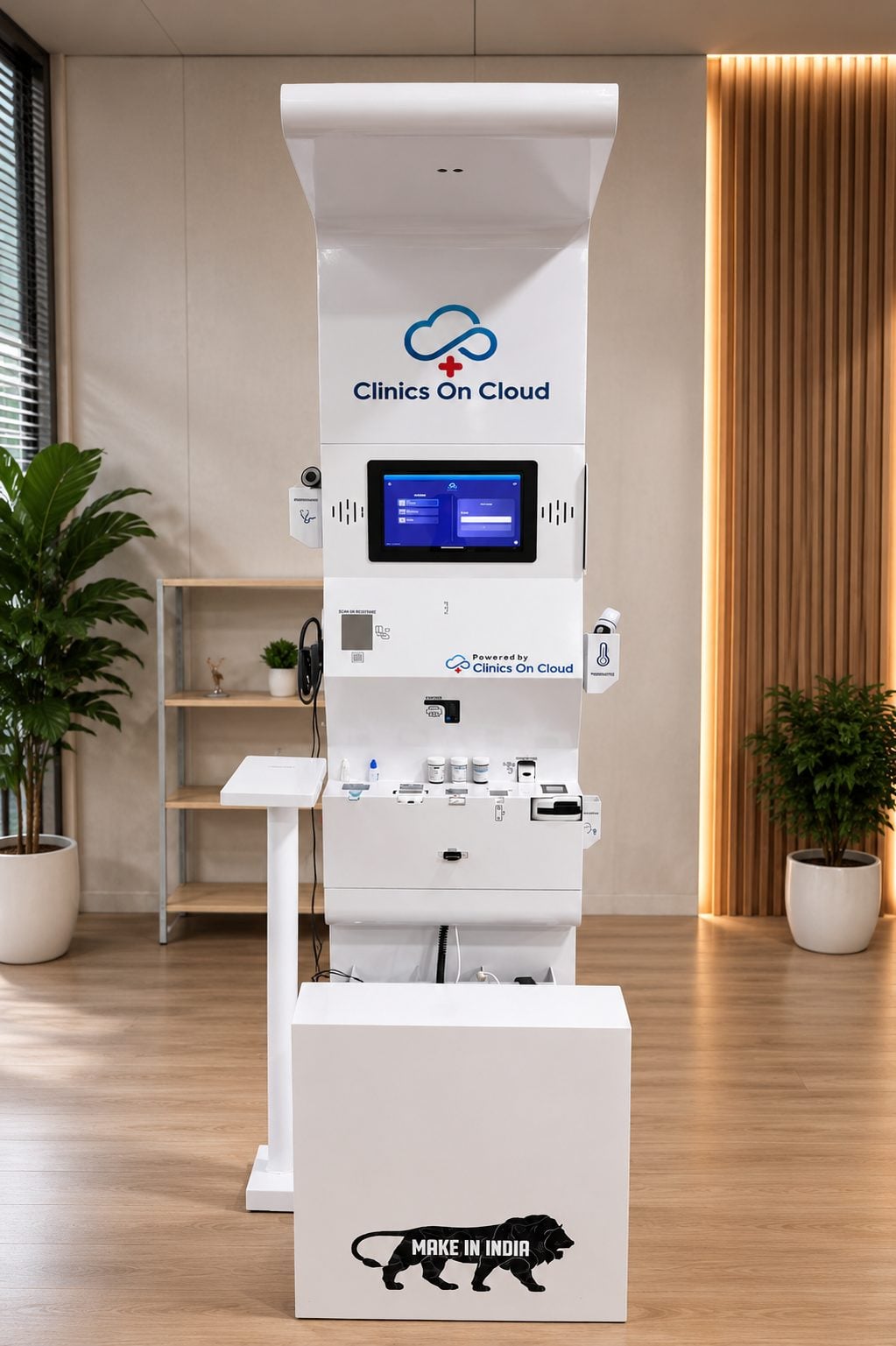
From 3,500+ installations to 12M+ screenings - how a 10-minute walk-up checkup is quietly rewriting who gets access to preventive care in India.
 Entry · MMU-01Mobile Medical Units
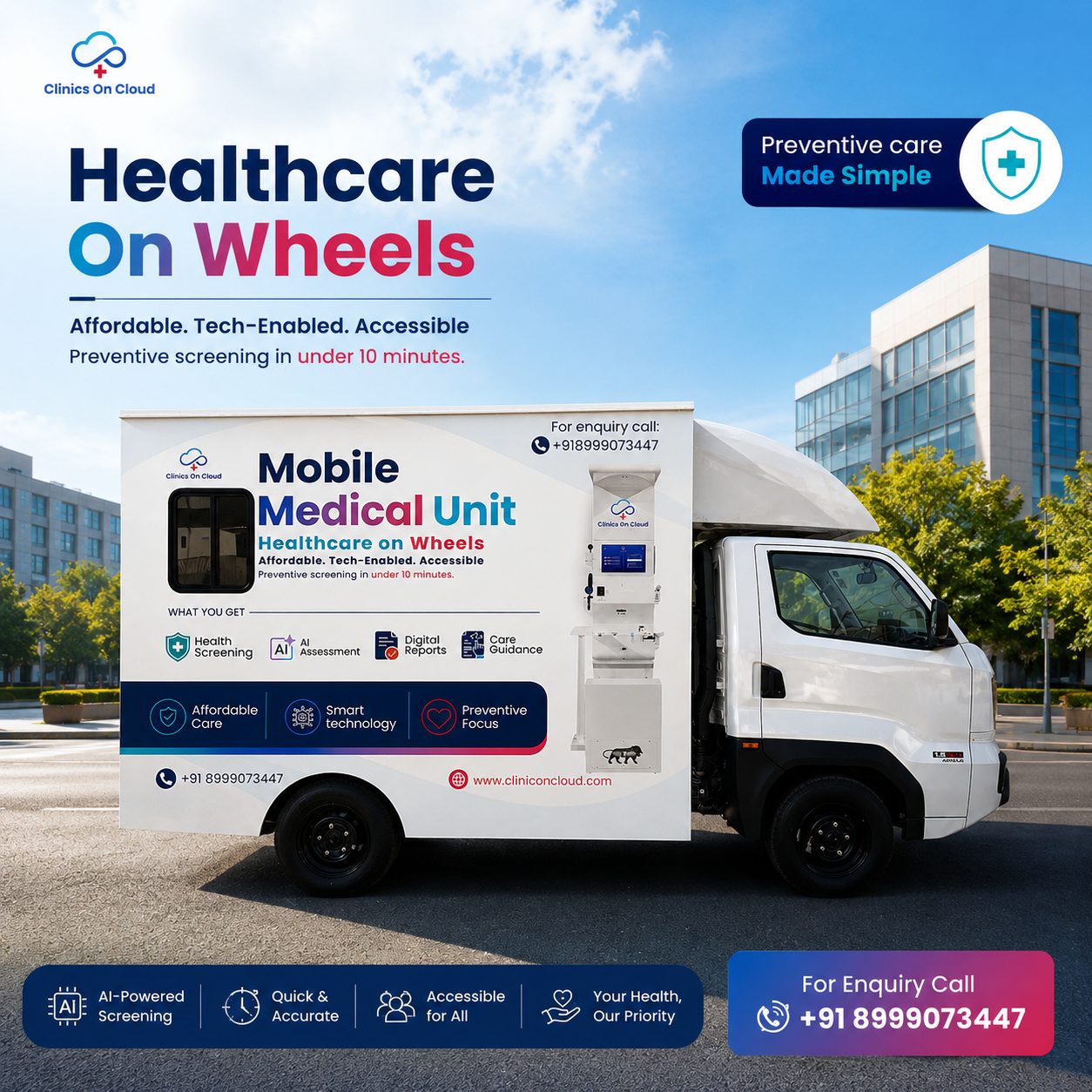
What actually goes inside a mobile medical unit - the devices, the cloud sync, the doctor connection - and how it delivers a full checkup anywhere a road exists.
Whether you're a government, corporate, NGO or entrepreneur - tell us what you need and our team usually replies within one business day.
+91 8999 073 447 · +91 9226 553 203
Mon – Sat · 9 AM to 6 PM IST
helpdesk@clinicsoncloud.com
Partnerships · Deployments · Support
www.clinicsoncloud.com
Products · Case Studies · News
Nighoje, Chakan MIDC
Pune, Maharashtra – 410501, India